
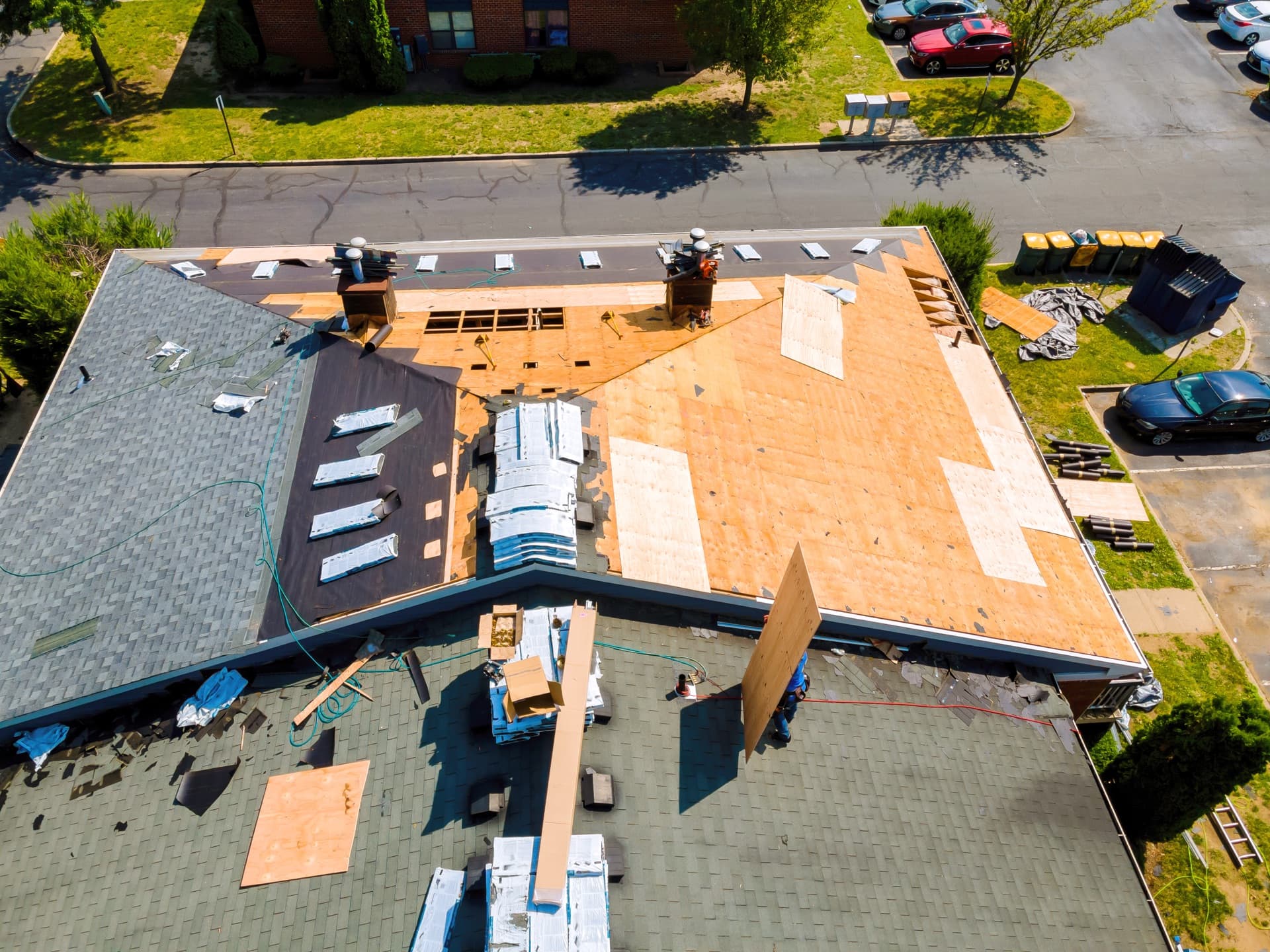
Most people think roof leaks start with shingles. They don't. The majority of leaks we trace in Seattle come back to flashing. Flashing is the thin metal (aluminum, galvanized steel, or copper) that seals every transition point on your roof. Anywhere water would pour straight into a gap between surfaces, flashing keeps it out.
Types of flashing and where they live
| Flashing Type | Location | Failure Signs | Repair Cost |
|---|---|---|---|
| Step flashing | Roof slope meets a vertical wall | Water stain on interior wall near junction | $400–$900 |
| Counter flashing | Tucked into chimney mortar or wall reglet | Gap between metal and masonry | $600–$1,500 |
| Valley flashing | Where two roof slopes meet | Rust, debris dams, staining along valley | $500–$1,200 |
| Drip edge | Along eaves and rakes | Rust, bent sections, fascia rot below | $200–$500 |
| Kick-out flashing | Bottom of roof-to-wall transition | Bubbling siding paint, wall rot | $150–$400 |
| Pipe boot flashings | Around plumbing vent pipes | Cracked rubber, gap between collar and pipe | $150–$300 |
Why flashing fails
Flashing doesn't fail all at once. It's a slow process. Sealant breaks down first — thermal cycling expands and contracts the metal, caulk cracks, and in the PNW constant moisture cycling breaks sealant down over 8 to 12 years. Nails back out — a nail that lifts even a sixteenth of an inch creates a channel for water. Galvanized steel rusts through after 15 to 20 years in our wet climate. Improper installation is more common than you'd think — flashing pieces need to overlap in the right direction so water sheds downhill. If a step flashing piece is lapped the wrong way, water runs behind it instead of over it.
The number one flashing failure in Seattle
Pipe boot flashings — we fix more of these than everything else combined
The rubber gasket around the vent pipe dries out and cracks from UV exposure in about 8 to 12 years. Once it cracks, rainwater runs straight down the pipe and into the house. The leak often shows up on a ceiling nowhere near the pipe because water travels along framing before it drips. Good news: a single failed pipe boot is a $150 to $300 fix. Bad news: a lot of homeowners don't know to look for it, so the water runs for months before anyone notices — and by then you might be dealing with rotted sheathing or mold in the attic.
Kick-out flashing deserves its own mention
At the bottom of every roof-to-wall transition, water running down the step flashing needs somewhere to go. Without a kick-out diverter, it pours behind the siding. The damage happens inside the wall where you can't see it: rotted sheathing, mold, ruined insulation. Most Seattle homes built before 2000 don't have one — it wasn't required by code, and builders skipped it. If your house has a roof that terminates into a sidewall above a lower section (common on split-levels and bump-outs), check for it. Adding one is cheap insurance.
When to call a pro vs. DIY
Small sealant touch-ups are reasonable DIY territory if you're comfortable on a roof. Anything beyond that — especially step flashing, counter flashing, or valley work — is best left to a roof repair crew. Flashing done wrong leaks worse than flashing left alone, and the consequences show up months later when the damage is already done. Use our roof inspection checklist to assess what you're dealing with, and if flashing is the problem, reach out. We'll get it sorted.