
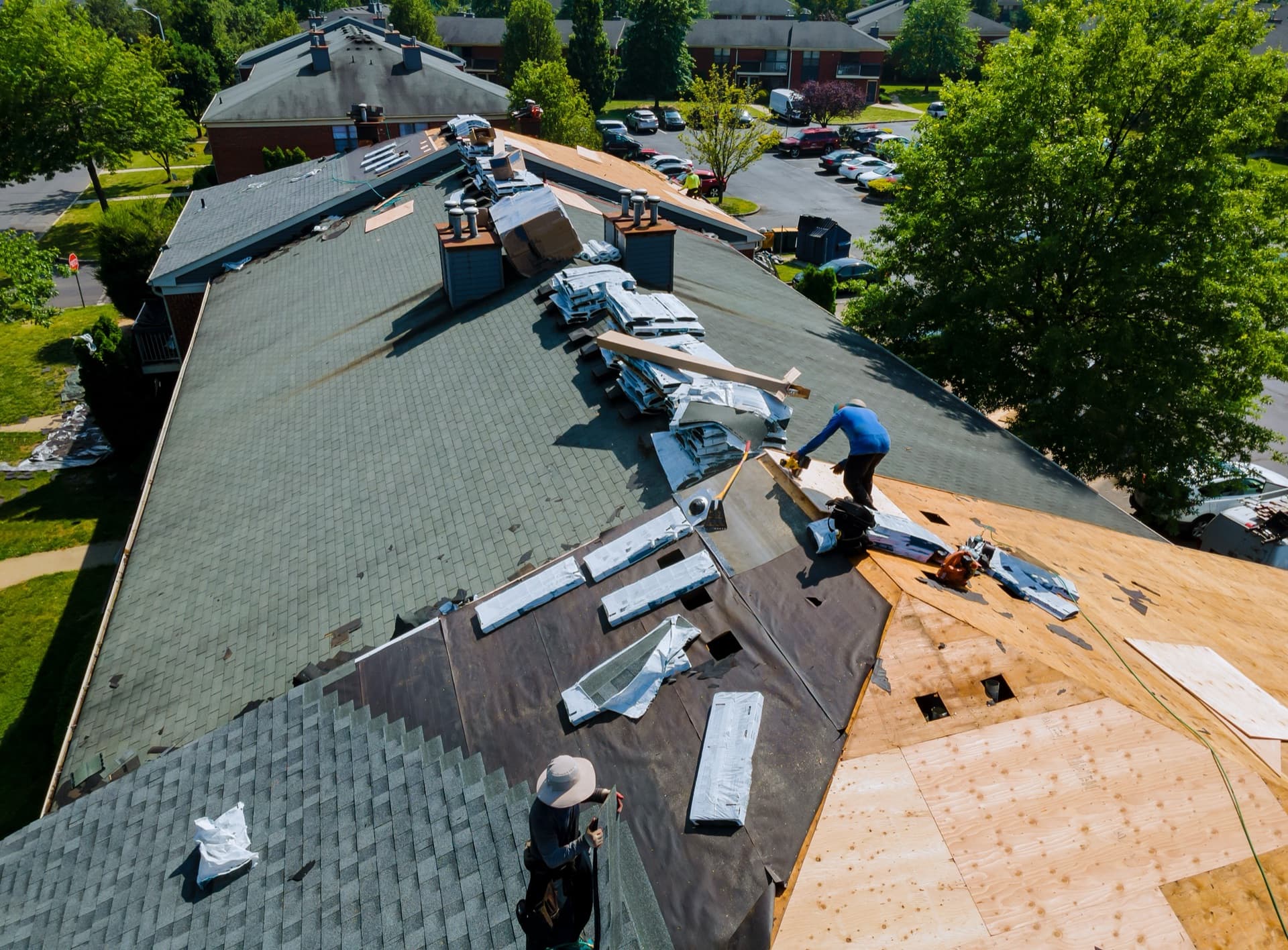
A branch punches through your roof during a November windstorm. Rain's pouring in through the hole. You've got buckets going, but the forecast says three more days of steady rain. This is when a tarp makes the difference between a repair bill and a full-blown interior rebuild. Done right, a tarp keeps water out for days or even weeks. Done wrong, it blows off in the next gust and you're back to square one.
When you actually need a tarp
You need a tarp when: a large section of shingles is missing and the deck is exposed, there's a puncture from a fallen branch, or you've got an active leak pouring water into the house with more rain on the way. You probably don't need one if: the leak is small and manageable with a bucket, the damage is cosmetic, or the forecast shows dry conditions for the next several days. In those cases, put a bucket under the drip, take photos for your insurance claim, and schedule a roof repair when a crew can get to you.
Safety first — and we mean it
Wet PNW roofs are extremely dangerous. Moss, algae, and rain turn shingles into an ice rink. Steep-pitch roofs (anything over about 6/12) are a no-go in wet conditions even for experienced roofers. If your roof is steep, if it's wet, or if you're not comfortable working at heights, do not go up there. The only scenario where DIY tarping makes sense is a single-story home with a low-pitch roof, dry or mostly dry conditions, and safe ladder access. If all three boxes aren't checked, stay on the ground.
How to tarp a roof yourself
Get a heavy-duty poly tarp (the blue ones from any hardware store work fine) at least six feet wider than the damaged area on every side. Drape it over the ridge so water sheds in both directions — the tarp needs to run from above the damage, over the ridge, and down the other side. Extend the bottom edge past the eave and into the gutter if possible. Secure the edges by wrapping them around 2x4 lumber and screwing through the 2x4 into the roof deck. Do NOT nail through the tarp — every nail hole becomes a new leak point. Pull the tarp tight. Wrinkles and slack spots collect water and create pools that add weight. If you don't have lumber, sandbags or cinder blocks along the edges will hold it through a calm night but won't survive strong wind.
Insurance covers this
Emergency mitigation is almost always covered — keep every receipt
Emergency tarping is almost always covered by your homeowner's insurance. Most policies require you to take reasonable steps to prevent further damage after an incident. If your roof gets damaged in a storm and you don't tarp it, and then the interior gets soaked over the next week, the insurer can argue you failed to mitigate and reduce your payout. Keep every receipt — the tarp, the lumber, the roofer's emergency visit invoice. All of it goes into your claim. Our insurance restoration work coordinates directly with adjusters.
A properly installed tarp can hold for weeks, but it's not a permanent fix. UV degrades the material, wind works at the edges, and every storm tests the fastening. Get the permanent repair scheduled as soon as weather allows — in Seattle that sometimes means waiting for a dry window, which can be a week or two in the middle of winter. The tarp will hold if it was installed right. If you've got a damaged roof right now and need someone there fast, contact us or call the number at the top of the page. We answer 24/7.