
Water's dripping through your ceiling at 2 AM. The wind's still howling outside. You don't know if there's a hole in the roof, a failed flashing, or a branch you can't see yet. Here's what to actually do in the first ten minutes — then what happens once a roofer shows up.
First ten minutes: contain, document, move stuff
Before you call anyone, handle what's in front of you. Get a bucket under the drip. If the ceiling is bulging, that means water is pooling above the drywall and about to come down all at once. Grab a screwdriver and poke a small hole at the lowest point of the bulge to let it drain into the bucket in a controlled way. Sounds wrong, but it's way better than having ten pounds of water rip a section of ceiling open onto your couch.
Move electronics, furniture, and rugs away from the wet zone. Lay down towels. If water is running down an interior wall, kill the power to that circuit at the breaker — wet drywall near live outlets is a real hazard.
Don't go up on the roof
A wet roof at night in a Seattle storm is the single most dangerous thing you could climb on. Every winter we hear about homeowners who fell trying to hang their own tarp. Take photos from inside and from the ground — that documentation matters for your insurance claim. Then wait for the crew.
When to call at 2 AM vs. wait till morning
Call now if any of these apply
Water is actively running in and you can't contain it with buckets. A tree or large limb is on the roof. You can see open sky from inside the attic. Shingles are missing and the deck is exposed to rain. Water is coming in near electrical panels or fixtures. If none of that applies — small contained drip, storm already passed, cosmetic missing shingles with no visible intrusion — wait until morning. It's safer for the crew and cheaper for you.
What a roofer actually does at 2 AM
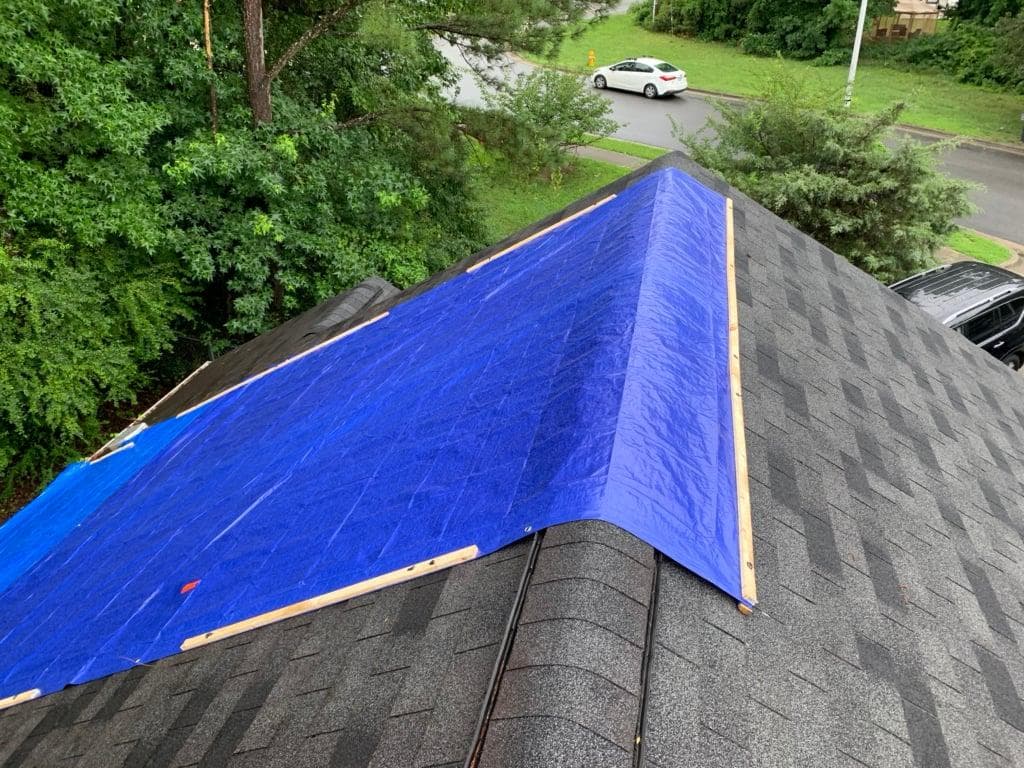
Once we're on-site for an emergency roof repair, the goal isn't a permanent fix — it's stopping the damage from getting worse until we can come back in daylight. We walk the perimeter with flashlights to locate the entry point. Lifted shingles from a windstorm. An obvious puncture from a branch strike. Failed flashing on the upwind face. Then we tarp the damaged section, securing the tarp with furring strips nailed into unaffected shingles (the tarp comes off cleanly later). If there's a hole in the deck, we board it from inside the attic or wrap it from above.
We document everything with photos — the condition before we touch anything, the damage extent, and the mitigation steps we took. Insurance adjusters want to see all of that, and our insurance restoration process makes sure nothing falls through the cracks if you're filing a claim. The whole emergency visit usually takes 60 to 90 minutes. Then we schedule the permanent repair for the next reasonable weather window.
What emergency tarping costs in Seattle
Most emergency tarp jobs in the Seattle metro run $400 to $900. The low end is a small tarp on a single-story home with easy access — a couple of lifted shingles from a windstorm. The high end is a larger tarp on a steep or two-story roof, or a job requiring board-up over a puncture. Late-night calls (roughly 10 PM to 6 AM) carry a small premium, usually $100 to $200. We don't hide that — you'll know before we come out. If we come back for the permanent fix, we typically credit the tarp cost toward the roof repair invoice.
Active damage vs. stable damage
Not every leak needs a same-night response. Sometimes a tarp in 40 mph winds at midnight creates more risk than waiting five hours until daylight. We've told homeowners to keep the bucket going, taken photos over the phone, and scheduled a crew for 7 AM. Everyone was safer, cost was lower, and the damage didn't get noticeably worse in five hours. The judgment call is whether damage is actively getting worse or whether it's contained and stable. We'll ask you questions on the phone to figure out which one you've got.
Real calls from recent Seattle storm seasons
Three jobs from recent winters
A 90-foot fir came down through a Queen Anne craftsman roof into a second-floor bedroom during a November windstorm. We tarped the opening at 1 AM, boarded the attic penetration, and coordinated with the tree service before doing the permanent repair — full insurance claim. | A West Seattle rambler lost 40 shingles off the windward slope in a January blow. We covered the whole exposed slope in tarp and furring strips at 4 AM and came back three days later when the weather broke. | A Ballard craftsman had water running down an interior wall from a failed chimney flashing under sustained wind-driven rain. We patched the gap with roofing cement and temporary membrane at midnight, then rebuilt the flashing properly the following week.
If you need to call right now
Have your address ready, describe what's happening in plain language, and note your roof material if you know it. We serve every neighborhood in Seattle and the surrounding metro and answer the phone 24/7. If you've got an active emergency, contact us here or call the number at the top of the page. Someone will pick up.